
Starting Point of the World History: Göbekli Tepe
- 7 Şub 2016
- 3 dakikada okunur
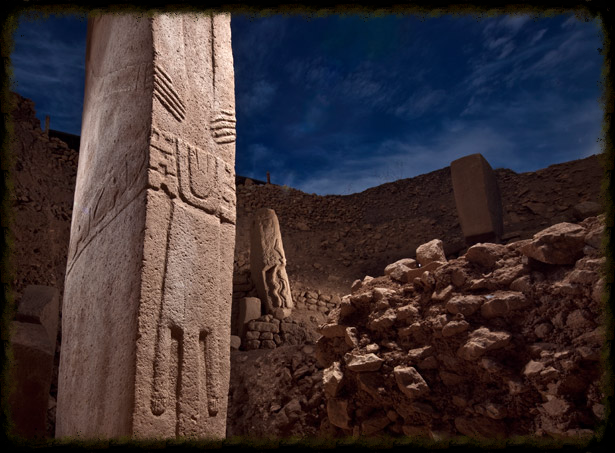
Looking at the history of our world, there are many civilizations. Many ruins still accomplished to remain standing until nowadays. Ruins, such as Stonehenge, Egyptian Pyramids, gives us information about the history. However, a discover that having been in recent years might have an attribute that can change lots of things. This historical site’s name is Göbekli Tepe. This place is located in approximately 12 km northeast of the city of Şanlıurfa, Turkey. This is a place that will change our opinions about the civilization of the world.
Göbekli Tepe is older than many ancient civilizations. For example, this place is older than 5000 years from the cities of Mesopotamia, 7000 years from Stonehenge and even 7500 years from Egyptian pyramids.
According to scientists, this place is very old about 10000-12000 B.C. Archeologists have been finding many stones that are shaped like the letter "T" and "L" in the excavation area. This area has a structure confined with round obelisk. This structure tells us that permanent settlements have begun and the process completed before 10000-20000 B.C. This place is an amazing example concerning permanent settlement in the world.
Göbekli Tepe is a place that 80 acres. According to scientists, Göbekli Tepe is not a living space. Found findings in here show that the people in Göbekli Tepe were praying here before 10000-20000 B.C. In other words, we can say that Göbekli Tepe is not a place which has antique such as pottery, it is a temple belonging to the Neolithic period.
This place attracted attention for the first time after a farmer, who plowing his field with the wooden plow, found an intaglio. In 1963, it was discovered in surface explorations that carried out the Project of Southeastern Anatolia Region, but the importance of this was not understood. In 1980, Peter Benedict has been talking about this place in his article, however, he also could not understand its importance. Excavation work has begun counseling by Prof. Dr. Klaus Schmidt with the decree of the council of ministers beginning in 2007 and it still continues today.
This is a historical artifact which consisted of T-shaped and L-shaped obelisks and that has involved to adorned stones with animal figures. This is considered the stones that look like the letter "T" symbolized mankind. These stones constitute the pray places that round or oval shapes.
Moreover, 20 new round area, which diameter is 20-30 m, has been discovered as a result of research. 20 new round area, which diameter is 20-30 m, were discovered as a result of research. Only six of them were unearthed. The thickness of the T-shaped stone is 1.4m and its length is 12m. Furthermore, there are two T-shaped stones in the middle of the circular area. Their lengths are 3-6m and their weights are approximately 40-60 tons. They were placed face-to-face and they depicted the pure human. There are further interesting foundlings. These are relief of reptiles, wolf heads, wild boars, cranes, bulls, wild ducks, storks, foxes, snakes, scorpions, wild sheep, lions, spiders and the most interesting thing is the human bodies without head. Also, the phallus was portrayed as too extravagant on the stones.
Göbekli Tepe was placed in the world heritage list as the world's oldest temple by UNESCO.
We thought that there were not primitive tools in the 10000-20000 B.C. Then, how they moved these columns there? How they made the relief on it? It is really difficult to answer this question...
National Geographic Documentary Film: Göbekli Tepe


Yorumlar